support this site

Showing posts with label future. Show all posts

Wednesday, June 17, 2009

Buckywire for drug delivery and more


Synthesis of a fullerene-based one-dimensional nanopolymer
through topochemical transformation of the parent nanowire (30 page pdf)


Large-scale practical applications of fullerene (C60) in nanodevices could be significantly facilitated if the commercially-available micrometer-scale raw C60 powder were further processed into a one-dimensional (1D) nanowire-related polymer displaying covalent bonding as molecular interlinks and resembling traditional important conjugated polymers. However, there has been little study thus far in this area despite the abundant literature on fullerene. Here we report the synthesis and characterization of such a C60-based nanowire polymer, (-C60TMB-)n, where TMB=1,2,4-trimethylbenzene, which displays a well-defined crystalline structure, exceptionally large length-to-width ratio and excellent thermal stability. The material is prepared by first growing the corresponding nanowire through a solution phase of C60 followed by a topochemical polymerization reaction in the solid state. Gas chromatography, mass spectrometry and 13C nuclear magnetic resonance evidence is provided for the nature of the covalent bonding mode adopted by the polymeric chains. Theoretical analysis based on detailed calculations of the reaction energetics and structural analysis provides an in-depth understanding of the polymerization pathway. The nanopolymer promises important applications in biological fields and in the development of optical, electrical, and magnetic nanodevices.


From MIT Technology Review Blog:

The exciting thing about this breakthrough is the potential to grow buckywires on an industrial scale from buckyballs dissolved in a vat of bubbling oil. Since the buckywires are insoluble, they precipitate out, forming crystals. (Here it ought to be said that various other groups are said to have made buckywires of one kind or another, but none seem to have nailed it from an industrial perspective.)

So what might buckywires be good for? First up is photovoltaics: these buckywires look as if they could be hugely efficient light harvesters because of their great surface area and the way that they can conduct photon-liberated electrons. Then there are various electronic applications in wiring up molecular circuit boards.

But perhaps the area of greatest interest is drug delivery. Geng and co suggest that buckywires ought to be safer than carbon nanotubes because the production method is entirely metal-free.


We have demonstrated for the first time an approach to the synthesis of a C60-based nanowire polymer and established the chemical bonding mode involved in the polymeric chains based on both experimental measurements and theoretical calculations. Importantly, the material adopts a crystalline 1D nanostructure which resembles carbon nanotubes in shape and other important conjugated polymers in structure. Since the material does not contain any metal but is simply composed almost entirely of carbon (while it contains hydrogen, the content is only 1.4 wt %), it suggests biological compatibility and it is, perhaps, even more attractive than carbon nanotubes for bio-applications. In addition, the material has further important potential for applications in photo-electrical devices because of the intrinsically large magnitude of the nonlinear optical response of C60 and the excellence of its photoinduced charge transfer properties. Considering all these, we believe that this work represents a step toward true applications of C60 in nanotechnology by the ability of processing commercially available raw C60 powder into a one-dimensional, crystalline, and covalently-bonded fullerene nanopolymer.

We consider that applications of the reported nanopolymer may be facilitated by a wet chemical approach through surface modification of the material using the rich chemistry of fullerene developed over the last 20 years. Since the nanopolymer is insoluble in common solvents, such surface modification or functionalization should be possible to achieve in either an aqueous or an organic solution without destructing its solid-state structure. Such a wet approach would benefit from low-cost processing, the need for only simple apparatus and the possibility of scaling-up to the industrial level. Moreover, the nanopolymer itself not only provides an example of phase transition of the parent nanowire driven by forming and breaking covalent bonds, but also illustrates the enduring significance of the original fullerene concept and its versatility as applied to new fullerene-related nanostructures. Finally, the host (C60) and guest (1,2,4-TMB) nature of the polymerization suggests a general host-guest route to the synthesis of new types of fullerene-based nanopolymers constructed by different organic monomers and fullerenes

Sunday, May 17, 2009

Improved personalized cancer treatment with new RNAi delivery


In technology that promises to one day allow drug delivery to be tailored to an individual patient and a particular cancer tumor, researchers at the University of California, San Diego School of Medicine, have developed an efficient system for delivering siRNA into primary cells. The work will be published in the May 17 in the advance on-line edition of Nature Biotechnology.

The team solved the problem of delivery of siRNAs into cells by making a PTD fusion protein with a double-stranded RNA-binding domain, termed PTD-DRBD, which masks the siRNA's negative charge. This allows the resultant fusion protein to enter the cell and deliver the siRNA into the cytoplasm where it specifically targets mRNAs from cancer-promoting genes and silences them.

The researchers have a startup, Traversa Therapeutics, which is commercializing this work.

Traversa's siRNA delivery technology is specifically designed to avoid the physical size and bioavailability problems inherent in the Liposome/cationic-lipid approach. The technology is non-cytotoxic, delivers to the entire cell population and all cell-types tested, and is dramatically smaller than a liposome. The Company expects the technology to provide improved pharmacokinetics, distribution and bioavailability over other methods. The technology supports delivery to primary and tumor cells, T cells, B cells, Macrophage, neuronal cells and human stem cells, where other approaches have failed. This ability to induce RNA interference in entire cell populations and all cell types in a non-cytotoxic fashion is unique to Traversa's technology and provides the Company's competitive advantage.

Traversa's siRNA delivery technology (PTD-DRBD) is a protein comprised of multiple Peptide Transduction Domains (PTD) linked to a Double-stranded RNA Binding Domain (DRBD). The PTD portion of the protein induces delivery into the cell through a fluid-uptake mechanism that all cells perform, called macropinocytosis. The DRBD portion of the protein initially binds to the siRNA, and later releases the siRNA once inside the cell.


RNA Interference (RNAi) is a recently discovered natural biological process. The Central Dogma of biology is that DNA makes RNA, and RNA subsequently makes protein. Because undesired proteins are the cause of most human disease, pharmaceutical drugs typically target select proteins and block their function. RNAi works upstream from the manufacture of protein in cells, silencing genes and thereby blocking the creation of these disease-causing proteins before they are made.

This breakthrough discovery is being harnessed by RNAi researchers to develop an entirely new class of human therapeutic that could potentially treat sixty percent of all human disease – the Interfering RNA. This new class of drugs brings with it enormous potential:

- Significantly improved specificity of target molecules
- Greater efficacy with fewer side effects
- New drugs for rare or difficult to treat diseases
- Reduced drug discovery timelines
- Faster response to pandemic infection

Interfering RNAs have tremendous selectivity, degrade only target RNAs, and yield specific gene silencing. However, due to their relatively large size (~14,000-18,000 Daltons), they require an additional delivery technology in order to enter cells and produce their intended effect.


"RNAi has an unbelievable potential to manage cancer and treat it," said Steven Dowdy, PhD, Howard Hughes Medical Institute Investigator and professor of cellular and molecular medicine at UC San Diego School of Medicine. "While there's still a long way to go, we have successfully developed a technology that allows for siRNA drug delivery into the entire population of cells, both primary and tumor-causing, without being toxic to the cells."

For many years, Dowdy has studied the cancer therapy potential of RNA inhibition which can be used to silence genes through short interfering, double-stranded RNA fragments called siRNAs. But delivery of siRNAs has proven difficult due to their size and negative electrical charge – which prohibits them from readily entering cells.

A small section of protein called a peptide transduction domain (PTD) has the ability to permeate cell membranes. Dowdy and colleagues saw the potential for PTDs as a delivery mechanism for getting siRNAs into cancer cells. He and his team had previously generated more than 50 "fusion proteins" using PTDs linked to tumor-suppressor proteins.

"Simply adding the siRNAs to a PTD didn't work, because siRNAs are highly negatively charged, while PTDs are positively charged, which results in aggregation with no cellular delivery," Dowdy explained. The team solved the problem by making a PTD fusion protein with a double-stranded RNA-binding domain, termed PTD-DRBD, which masks the siRNA's negative charge. This allows the resultant fusion protein to enter the cell and deliver the siRNA into the cytoplasm where it specifically targets mRNAs from cancer-promoting genes and silences them.

To determine the ability of this PTD-DRBD fusion protein to deliver siRNA, the researchers generated a human lung cancer reporter cell line. Using green and fluorescent protein and analyzing the cells using flow cytometry analysis, they were able to determine the magnitude of RNA inhibitory response and the percentage of cells undergoing this response. They found that the entire cellular population underwent a maximum RNAi response. Similar results were obtained in primary cells and cancer cell lines.

"We were subsequently able to introduce gene silencing proteins into a large percentage of various cell types, including T cells, endothelial cells and human embryonic stem cells," said Dowdy. "Importantly, we observed no toxicity to the cells or innate immune responses, and a minimal number of transcriptional off-target changes."

These RNAi methods can be continually tweaked to combat new mutations – a way to overcome a major problem associated with current cancer therapies. "Such therapies can't be used a second time if a cancer tumor returns, because the tumor has mutated the target gene to avoid the drug binding," said Dowdy. "But since the synthetic siRNA is designed to bind to a single mutation and only that mutation on the genome, it can be easily and rapidly changed while maintaining the delivery system – the PTD-DRBD fusion protein."

"Cancer is a complex, genetic disease that is different in every patient," Dowdy added. "This is still in early stages, but I believe the siRNA-induced RNAi approach to personalized cancer treatment is the only thing on the table."

Friday, September 12, 2008

A complex hybrid Nanoparticle slightly smaller than a virus deliver drug cocktail


The nanometer-sized cargo ships look individually like a chocolate-covered nut cluster, in which a biocompatible lipid forms the chocolate shell and magnetic nanoparticles, quantum dots and the drug doxorubicin are the nuts. Credit: Ji-Ho Park, UCSD

Scientists at UC San Diego, UC Santa Barbara and MIT report that their nano-cargo-ship system integrates therapeutic and diagnostic functions into a single device that avoids rapid removal by the body’s natural immune system. It is 50 nanometers in size. So it has three times less volume than the typical virus.


1 nm diameter of glucose molecule
2 nm diameter of DNA helix
5 nm diameter of insulin molecule
6 nm diameter of a hemoglobin molecule
10 nm thickness of cell wall (gram negative bacteria)
75 nm size of typical virus
200 nm diameter of smallest bacteria
1000nm diameter of sperm cell (smallest cell in the human body)


“The idea involves encapsulating imaging agents and drugs into a protective ‘mother ship’ that evades the natural processes that normally would remove these payloads if they were unprotected,” said Michael Sailor, a professor of chemistry and biochemistry at UCSD who headed the team of chemists, biologists and engineers that turned the fanciful concept into reality. “These mother ships are only 50 nanometers in diameter, or 1,000 times smaller than the diameter of a human hair, and are equipped with an array of molecules on their surfaces that enable them to find and penetrate tumor cells in the body.”

These microscopic cargo ships could one day provide the means to more effectively deliver toxic anti-cancer drugs to tumors in high concentrations without negatively impacting other parts of the body.

The researchers designed the hull of the ships to evade detection by constructing them of specially modified lipids--a primary component of the surface of natural cells. The lipids were modified in such a way as to enable them to circulate in the bloodstream for many hours before being eliminated. This was demonstrated by the researchers in a series of experiments with mice.

The researchers loaded their ships with three payloads before injecting them in the mice. Two types of nanoparticles, superparamagnetic iron oxide and fluorescent quantum dots, were placed in the ship’s cargo hold, along with the anti-cancer drug doxorubicin. The iron oxide nanoparticles allow the ships to show up in a Magnetic Resonance Imaging, or MRI, scan, while the quantum dots can be seen with another type of imaging tool, a fluorescence scanner.


This study provides the first example of a single nanomaterial used for simultaneous drug delivery and multimode imaging of diseased tissue in a live animal," said Ji-Ho Park, a graduate student in Sailor's laboratory who was part of the team. Geoffrey von Maltzahn, a graduate student working in Bhatia's laboratory, was also involved in the project, which was financed by a grant from the National Cancer Institute of the National Institutes of Health.

The nano mother ships look individually like a chocolate-covered nut cluster, in which a biocompatible lipid forms the chocolate shell and magnetic nanoparticles, quantum dots and the drug doxorubicin are the nuts. They sail through the bloodstream in groups that, under the electron microscope, look like small, broken strands of pearls.

The researchers are now working on developing ways to chemically treat the exteriors of the nano ships with specific chemical "zip codes," that will allow them to be delivered to specific tumors, organs and other sites in the body.

Friday, August 29, 2008

Carbon nanotubes could reduce side effects from cancer treatment.

MIT Technology Review reports that carbon nanotubes could reduce the side effects of cancer drugs and mice tests show they are twice as effective at reducing tumor size. The researchers estimate that drug uptake within a tumor was 10 times higher for nanotube delivery than for Taxol. This uptake means that smaller doses could be used to achieve the same effects as other treatments, reducing side effects.

Research from Stanford University has shown that carbon nanotubes loaded with anticancer drugs can target tumor cells while steering clear of healthy tissue.

The nanotubes--on average 100 nanometers long and a few nanometers wide--pass easily through the leaky walls of tumor blood vessels but do not get into healthy blood vessels. So the researchers realized that drugs attached to the nanotubes could be carried inside tumors without harming normal tissue.

To make working nano-drug transporters, the researchers coated the nanotubes with a molecule called polyethylene glycol (PEG), which has three branches on one end, then attached molecules of the anticancer drug paclitaxel to each branch. Each of the 100-nanometer-long nanotubes carried about 150 drug molecules in total. "Think of a carbon nanotube as a boat," says Steve Lippard, a chemistry professor at MIT, who was not involved in the research. "The advantage of the branched PEG is that you can have multiple passengers at each seat." Dai adds that the branched PEG is stable in the bloodstream for a relatively long time, giving the nanotubes more time to find and treat a tumor before leaving the body.

The drug-delivery technique was tested in mice that had been injected with breast cancer cells. Once the tumors grew to a specific size, the researchers administered a dose of the drug-laden nanotubes every six days. They gave another group of mice similar doses of different forms of paclitaxel, including the clinical drug Taxol, and left some untreated. After 22 days, they found that the tumors treated by nanotube delivery were less than half the size of the tumors treated by the second most effective treatment, Taxol.

Wednesday, July 30, 2008

Nanobialys can carry drugs to tumors or plaques


Ultra-miniature bialy-shaped particles — called nanobialys because they resemble tiny versions of the flat, onion-topped rolls popular in New York City — could soon be carrying medicinal compounds through patients' bloodstreams to tumors or atherosclerotic plaques.

The nanobialys answered a need for an alternative to the research group's gadolinium-containing nanoparticles, which were created for their high visibility in magnetic resonance imaging (MRI) scans.

Gadolinium is a common contrast agent for MRI scans, but recent studies have shown that it can be harmful to some patients with severe kidney disease.

"The nanobialys contain manganese instead of gadolinium," says first author Dipanjan Pan, Ph.D., research instructor in medicine in the Cardiovascular Division. "Manganese is an element found naturally in the body. In addition, the manganese in the nanobialys is tied up so it stays with the particles, making them very safe."


A bialy is a Polish roll like a bagel without a hole that can be made with different toppings.

Tuesday, April 29, 2008

Folded up micrometer-scale 'voxels' for drug delivery


After starting the folds using magnetic forces, the structure is sealed using capillary action.


USC researchers have made pyramid structures that are 40 micrometers on each side

Part one is the creation of flat patterns, origami, of exactly the fold up shapes familiar to kindergarten children making paper pyramids, cubes or other solids, except that these are as small 40 micrometers (µm) on a side. (1 inch = 25,400 µm)

Instead of paper, the USC researchers created the patterns in polysilicon sitting on top of a thin film of gold, using a well-established commercial silicon wafer process called PolyMUMPs. The next step was clearing the polysilicon off the hinge areas by etching.

When the blanks were later electrocoated with permalloy to make them magnetic, the photomask used left hinge areas uncoated, to make sure they were the places that folded.

Then the folding had to be accomplished. First the researchers bent the hinges by application of magnetic force to the permalloy. Water pressure and capillary forces generated by submerging the tiny blanks in water, and drying them off did the final folding into shape.

The experiments spend considerable time comparing various methods of controlling the closure effects of water drying with simple flaps designed to close over each other to form "envelops," the directing water from different directions sequence the closing. Varying the time of trying could produce tighter seams.

Nanodiamonds 100 times cheaper, used to track cells in the body and deliver chemotherapy drugs

Taiwanese scientists have found a way to slash the cost of making the diamond chips by around 100 times.

Nanodiamond's fluorescent properties could be used to track cells moving through the body. And, last year, researchers showed they could safely deliver chemotherapy drugs.

Cheaper alternatives to nanodiamonds, such as fluorescent dyes or small chunks of semiconductor known as quantum dots, are in use already. The diamonds, though, are less prone to blinking on and off than fluorescent dyes, and are not toxic to cells, unlike quantum dots.

FNDs are usually made by firing a high-energy electron beam into commercially available diamond powder and heating it up to 800 °C. Huan-Cheng Chang and colleagues at Academia Sinica in Taipei shoot a much less intense, and hence cheaper, beam of helium ions at diamond powder to make FNDs of the same quality.

Chang's team could track the movement of a single fluorescent nanodiamond within a cell for over 3 minutes.

The researchers have also explored other applications for their cheap diamonds, such as using them to monitor stem cells in developing tissue, or to carry drugs into cells.

"In particular, we have demonstrated that FNDs are able to interact with plasmid DNA and to deliver different genes into cultured human cells," Chang told New Scientist. That could be used for gene therapy, or DNA vaccines.

Chang and his colleagues have set up a commercial operation selling their nanodiamonds and are working on making them even smaller and to fluoresce more brightly.

The cheaper diamond chips need to be made smaller, though, if they are to perform well as markers to reveal the inner workings of cells, he adds.

Friday, April 18, 2008

Tiny Magnets for more effective Gene Therapy targeting for cancer, arthritis, heart disease and more

The technique involves inserting nanomagnets into monocytes - a type of white blood cell used to carry gene therapy - and injecting the cells into the bloodstream. The researchers then placed a small magnet over the tumour to create a magnetic field and found that this attracted many more monocytes into the tumour.

This new technique could also be used to help deliver therapeutic genes in other diseases like arthritic joints or ischemic heart tissue.

Though the concept of magnetic targeting for drug and gene delivery has been around for decades, major technical hurdles have prevented its translation into a clinical therapy. By harnessing and enhancing the monocytes' innate targeting abilities, this technique offers great potential to overcome some of these barriers and bring the technology closer to the clinic.

The team are now looking at how effective magnetic targeting is at delivering a variety of different cancer-fighting genes, including ones which could stop the spread of tumours to other parts of the body.

Thursday, March 27, 2008

Nested' nanoparticles increase efficiency of drug delivery

University of Texas researchers believe that by encasing their drugs in a series of nanoparticles they can produce a highly targeted treatment that bypasses the body's immune defences which have typically plagued other nanotechnology therapies.

These defences protect the body from foreign bodies that enter the bloodstream, including therapeutic nanoparticles. The different levels of attack include enzymes in the blood corrode the particles and microphage cells that actively attack and destroy the particles and remove them from the bloodstream.

These defences are so effective that on average just one out of every 100,000 drug molecules actually end up in the area they were meant to be targeting. In the past it had been difficult to find particles that could both penetrate these "biobarriers" and effectively find and target the correct tumour cells.

Mauro Ferrari's multistage delivery system overcomes these defences using a series of nanoparticles, contained one inside the other. As it passes through each barrier the drug sheds a shell to reveal a new particle that is best suited to the next line of immune defence


1. First the largest nanoparticle is a mesoporous silicon particle, designed to avoid attack by the microphages and which can withstand enzyme corrosion.

2. Once in their desired position, the silicon particles can release quantum dots or carbon nanotubes - both of which act as contrast agents for imaging applications. The carbon nanotubes can also be stimulated to produce heat, which itself could be used as a therapy.

These particles can also be used to deliver other therapeutic agents, to achieve high concentrations within the tumour without needing to increase the actual dosage of the drug. Ferrari is currently investigating the possibility of using the particles to deliver short interfering RNA (siRNA) molecules that could silence messenger RNA within a tumour cell to stop it reproducing.

FURTHER READING
Abstract of the paper : Mesoporous silicon particles as a multistage delivery system for imaging and therapeutic applications

Friday, March 21, 2008

Lipid Polymer Nanocontainers with controlled permeability


From Nano Letters, "Biofunctionalized Lipid−Polymer Hybrid Nanocontainers with Controlled Permeability"

We have successfully developed, for the first time, a novel polymer–lipid hybrid nanocontainer with controlled permeability functionality. The nanocontainer is made by nanofabricating holes with desired dimensions in an impermeable polymer scaffold by focused ion beam drilling and sealing them with lipid bilayers containing remote-controlled pore-forming channel proteins. This system allows exchange of solutions only after channel activation at will to form temporary pores in the container. Potential applications are foreseen in bionanosensors, nanoreactors, nanomedicine, and triggered delivery.


FURTHER READING
Alma Dudia's PhD thesis "Nanofabricated biohybrid structures for controlled drug delivery"

Wednesday, February 27, 2008

Nanoemulsion vaccines

A novel technique for vaccinating against a variety of infectious diseases – using an oil-based emulsion placed in the nose, rather than needles – has proved able to produce a strong immune response against smallpox and HIV in two new studies.

The results build on previous success in animal studies with a nasal nanoemulsion vaccine for influenza, reported by University of Michigan researchers in 2003.

Nanoemulsion vaccines developed at the Michigan Nanotechnology Institute for Medicine and the Biological Sciences at U-M are based on a mixture of soybean oil, alcohol, water and detergents emulsified into ultra-small particles smaller than 400 nanometers wide, or 1/200th the width of a human hair. These are combined with part or all of the disease-causing microbe to trigger the body’s immune response.

The surface tension of the nanoparticles disrupts membranes and destroys microbes but does not harm most human cells due to their location within body tissues. Nanoemulsion vaccines are highly effective at penetrating the mucous membranes in the nose and initiating strong and protective types of immune response, Baker says. U-M researchers are also exploring nasal nanoemulsion vaccines to protect against bioterrorism agents and hepatitis B.

The smallpox results, which appear in the February issue of Clinical Vaccine Immunology, could lead to an effective human vaccine against smallpox that is safer than the present live-vaccinia virus vaccine because it would use nanoemulsion-killed vaccinia virus, says Baker.

Anna U. Bielinska, Ph.D., a research assistant professor in internal medicine at the U-M Medical School, and others on Baker’s research team developed a killed-vaccinia virus nanoemulsion vaccine which they placed in the noses of mice to trigger an immune response. They found the vaccine produced both mucosal and antibody immunity, as well as Th1 cellular immunity, an important measure of protective immunity.

When the mice were exposed to live vaccinia virus to test the vaccine’s protective effect, all of them survived, while none of the unvaccinated control mice did. The researchers conclude that the nanoemulsion vaccinia vaccine offers protection equal to that of the existing vaccine, without the risk of using a live virus or the need for an inflammatory adjuvant such as alum hydroxide.

In antibody immunity, antibodies bind invading microbes as they circulate through the body. In cellular immunity, the immune system attacks invaders inside infected cells. There is growing interest in vaccines that induce mucosal immunity, in which the immune system stops and kills the invader in mucous membranes before it enters body systems.

A National Institutes of Health program, the Great Lakes Regional Centers of Excellence for Biodefense and Emerging Infectious Diseases, funded the research. If the federal government conducts further studies and finds the nanoemulsion smallpox vaccine effective in people, it could be a safer way to protect citizens and health care workers in the event of a bioterrorism attack involving smallpox, Baker says.

That would allay concerns about the current vaccine’s safety which arose in 2002. On the eve of the Iraq War, the Bush administration proposed a voluntary program to vaccinate military personnel and 500,000 health care workers with the existing vaccine to prepare for the possible use of smallpox virus as a biological weapon.

Monday, December 10, 2007

Nanorobot drug delivery

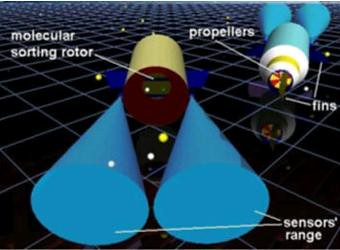
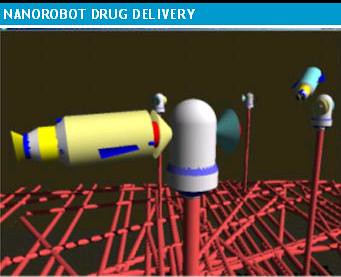
Adriano Cavalcanti is CEO and chairman of CAN Center for Automation in Nanobiotech. Adriano and his coleagues have proposed a nanorobot platform should enable patient pervasive monitoring, and details are given in prognosis with nanorobots application for intracranial treatments. This integrated system also points towards precise diagnosis and smart drug delivery for cancer therapy.


nanorobot for nanomedicine drug delivery


Simulated nanorobot for drug delivery

Fully operational nanorobots for biomedical instrumentation should be achieved as a result of nanobioelectronics and proteomics integration. The proposed platform should enable patient pervasive monitoring, and details are given in prognosis with nanorobots application for intracranial treatments. This integrated system also points towards precise diagnosis and smart drug delivery for cancer therapy.

The methodologies and the implemented 3D simulation described in our study served as a test bed for molecular machine prototyping. The numerical analysis and advanced simulations provided a better understanding on how nanorobots should interact inside the human body. Hence, based on such information, we have proposed the innovative hardware architecture with a nanorobot model for use in common medical applications. The nanorobot takes chemical and thermal gradient changes as interaction choices for in vivo treatments. The use of mobile phones with RF is adopted in this platform as the most effective approach for control upload, helping to interface nanorobots communication and energy supply.

The next steps in our work can be defined as follows: (a) model manufacturing with CNT-CMOS biochip integration; (b) laboratory studies for in vivo tests; and (c) commercialization. The pipeline for development in the medical sector typically requires research and efforts to get new ideas out of laboratories and into the marketplace


FURTHER READING
Nanorobot design website

They have written many papers on this work. Robert Freitas is involved in some of them.

Nanorobot architecture for medical target identification.

The nanorobot interaction with the described workspace shows how time actuation is improved based on sensor capabilities. Therefore, our work addresses the control and the architecture design for developing practical molecular machines. Advances in nanotechnology are enabling manufacturing nanosensors and actuators through nanobioelectronics and biologically inspired devices. Analysis of integrated system modeling is one important aspect for supporting nanotechnology in the fast development towards one of the most challenging new fields of science: molecular machines. The use of 3D simulation can provide interactive tools for addressing nanorobot choices on sensing, hardware architecture design, manufacturing approaches, and control methodology investigation.


Earlier work was with CMOS versions of small robots

Hardware architecture for nanorobots

Freitas' nanomedicine site

Center for Automation in Nanobiotech website

Friday, October 12, 2007

Nanodiamonds delivery chemotherapy drugs without negative side effects

Northwestern University researchers have shown that nanodiamonds -- much like the carbon structure as that of a sparkling 14 karat diamond but on a much smaller scale -- are very effective at delivering chemotherapy drugs to cells without the negative effects associated with current drug delivery agents.

Their study, published online by the journal Nano Letters, is the first to demonstrate the use of nanodiamonds, a new class of nanomaterials, in biomedicine. In addition to delivering cancer drugs, the model could be used for other applications, such as fighting tuberculosis or viral infections, say the researchers.

Nanodiamonds promise to play a significant role in improving cancer treatment by limiting uncontrolled exposure of toxic drugs to the body. The research team reports that aggregated clusters of nanodiamonds were shown to be ideal for carrying a chemotherapy drug and shielding it from normal cells so as not to kill them, releasing the drug slowly only after it reached its cellular target.

To make the material effective, Ho and his colleagues manipulated single nanodiamonds, each only two nanometers in diameter, to form aggregated clusters of nanodiamonds, ranging from 50 to 100 nanometers in diameter. The drug, loaded onto the surface of the individual diamonds, is not active when the nanodiamonds are aggregated; it only becomes active when the cluster reaches its target, breaks apart and slowly releases the drug. (With a diameter of two to eight nanometers, hundreds of thousands of diamonds could fit onto the head of a pin.)

“The nanodiamond cluster provides a powerful release in a localized place -- an effective but less toxic delivery method,” said co-author Eric Pierstorff, a molecular biologist and post-doctoral fellow in Ho’s research group. Because of the large amount of available surface area, the clusters can carry a large amount of drug, nearly five times the amount of drug carried by conventional materials.

Liposomes and polymersomes, both spherical nanoparticles, currently are used for drug delivery. While effective, they are essentially hollow spheres loaded with an active drug ready to kill any cells, even healthy cells that are encountered as they travel to their target. Liposomes and polymersomes also are very large, about 100 times the size of nanodiamonds -- SUVs compared to the nimble nanodiamond clusters that can circulate throughout the body and penetrate cell membranes more easily.

Unlike many of the emerging nanoparticles, nanodiamonds are soluble in water, making them clinically important. “Five years ago while working in Japan, I first encountered nanodiamonds and saw it was a very soluble material,” said materials scientist Houjin Huang, lead author of the paper and also a post-doctoral fellow in Ho’s group. “I thought nanodiamonds might be useful in electronics, but I didn’t find any applications. Then I moved to Northwestern to join Dean and his team because they are capable of engineering a broad range of devices and materials that interface well with biological tissue. Here I’ve focused on using nanodiamonds for biomedical applications, where we’ve found success.

“Nanodiamonds are very special,” said Huang. “They are extremely stable, and you can do a lot of chemistry on the surface, to further functionalize them for targeting purposes. In addition to functionality, they also offer safety -- the first priority to consider for clinical purposes. It’s very rare to have a nanomaterial that offers both.”

“It’s about optimizing the advantages of a material,” said Ho, a member of the Lurie Cancer Center. “Our team was the first to forge this area -- applying nanodiamonds to drug delivery. We’ve talked to a lot of clinicians and described nanodiamonds and what they can do. I ask, ‘Is that useful to you?’ They reply, ‘Yes, by all means.’”

For their study, Ho and his team used living murine macrophage cells, human colorectal carcinoma cells and doxorubicin hydrochloride, a widely used chemotherapy drug. The drug was successfully loaded onto the nanodiamond clusters, which efficiently ferried the drug inside the cells. Once inside, the clusters broke up and slowly released the drug.

In the genetic studies, the researchers exposed cells to the bare nanodiamonds (no drug was present) and analyzed three genes associated with inflammation and one gene for apoptosis, or cell death, to see how the cells reacted to the foreign material. Looking into the circuitry of the cell, they found no toxicity or inflammation long term and a lack of cell death. In fact, the cells grew well in the presence of the nanodiamond material.